Expressing support for the strengthening of United States-Africa partnerships in critical minerals development.
Sponsor
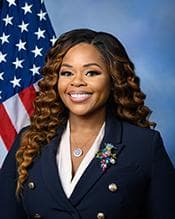
Full profile: /officials/C001127
Source: Congress.gov · FEC
Cosponsors (1)
Members who have signed on to support this bill since introduction. Source: Congress.gov.
Latest Action
The most recent step in the bill's legislative path. Committee Activity below shows referrals and reports; the full action-by-action history including floor proceedings lives at Congress.gov →
ASSUMING FIRST SPONSORSHIP - Mr. Jackson (IL) asked unanimous consent that he may hereafter be considered as the first sponsor of H. Res. 179, a resolution originally introduced by Representative Cherfilus-McCormick for the purpose of adding cosponsors and requesting reprintings pursuant to clause 7 of rule XII. Agreed to without objection.
2026-09-02
Source: Congress.gov
Committee Activity
Currently in
- House Committee on Foreign AffairsReferred To · 2025-03-03
Plain-English Summary
Plain-English summary pending. Introduced on 2025-03-03. Check back soon — summaries are generated as bills progress through Congress.
Subjects
Full Bill Text
Verbatim text published on Congress.gov via GovInfo. Use Cmd+F / Ctrl+F to search within this excerpt.
[Congressional Bills 119th Congress] [From the U.S. Government Publishing Office] [H. Res. 179 Introduced in House (IH)] <DOC> 119th CONGRESS 1st Session H. RES. 179 Expressing support for the strengthening of United States-Africa partnerships in critical minerals development. _______________________________________________________________________ IN THE HOUSE OF REPRESENTATIVES March 3, 2025 Mrs. Cherfilus-McCormick (for herself and Mr. Jackson of Illinois) submitted the following resolution; which was referred to the Committee on Foreign Affairs _______________________________________________________________________ RESOLUTION Expressing support for the strengthening of United States-Africa partnerships in critical minerals development. Whereas critical minerals are essential to United States national security and economic interests; Whereas global critical minerals supply chains on which many United States firms and defense needs rely are substantially controlled by foreign entities of concern (FEOC), notably including multiple commercial entities based in or aided by the People's Republic of China (PRC); Whereas multiple PRC commercial actors are foreign entities of concern, as defined under United States law: entities owned and controlled by, or subject to the jurisdiction or direction of a government of a foreign country, such as the PRC, that may engage in activity detrimental to United States interests; Whereas the International Monetary Fund estimates that sub-Saharan Africa holds 30 percent of the volume of proven critical mineral reserves, and at least 20 African countries export a range of minerals and metals, including those that are deemed ``critical'' to United States national security and economic interests; Whereas critical minerals such as cobalt, lithium, and nickel are essential to a clean energy transition, consumer electronics, and the United States defense industrial base; Whereas some African nations are seeking to increase investments in their critical mineral mining and processing sectors as a means of fostering greater national mineral-related value-added refining, processing, earnings, and related socioeconomic development in their countries; Whereas responsible mining--mining that is pursued in a manner that is environmentally and legally sound, socioeconomically inclusive, and well-governed--produces sustainable state revenues, local employment, technological transfer and community development; Whereas poorly governed and unregulated mining frequently produces corruption, labor abuses, environmental degradation, and violent conflict; Whereas the United States-initiated Mineral Security Partnership was established in 2022 and is composed of 14 countries and the European Union committed to catalyzing public and private investment in high standard-based development of critical mineral supply chains and responsible mining practices globally; Whereas, in 2022, the United States signed a Memorandum of Understanding (MOU) with the Democratic Republic of Congo and Zambia to support these two countries' commitment to develop jointly a supply chain for electric vehicle batteries; Whereas the International Energy Agency (IEA) projects that between $180 billion and $220 billion are expected to be invested in the mining of critical minerals between 2022 and 2030, but that only 10 percent of such amount are slated to be invested in Africa; Whereas, in 2023, the United States was 82 percent or more net-reliant on imports from abroad for supplies of at least 29 critical minerals, including 14 rare earth elements, and substantially import-reliant on other critical minerals and other technology-essential mined commodities; and Whereas the often-substantial degree of PRC control over critical mineral supply chains, including through PRC-origin foreign entities of concern and the PRC's imposition of licensing regimes that could potentially restrict PRC exports of selected essential critical minerals pose grave national security risks to the United States: Now, therefore, be it Resolved, Tt is the sense of the House of Representatives that-- (1) United States policy should seek to-- (A) diversify the sources of supplies of critical minerals in a manner that prevents Foreign Entities of Concerns (FEOCs) from restricting, increasing the cost, or otherwise negatively affecting…
Show the remaining 391 wordsHide the remaining 391 words
United States access to these resources; (B) improve the efficacy, efficiency, and coordination of United States Federal agencies working to help businesses invest in critical minerals in foreign countries friendly to the United States, including through these agencies' implementation of United States Government commitments under the United States-led multinational Minerals Security Partnership (MSP); and (C) enhance mutually beneficial partnership with countries in Africa that produce or possess reserves of critical minerals by-- (i) mobilizing and supporting investments in new or expanded critical mineral production and processing projects in African markets in order to bolster equitable and transparent global market-based access to African mineral production and promote responsible sourcing and value-added processing of critical minerals in Africa; (ii) providing incentives, such as financing or technical assistance, for United States business, and businesses in African countries friendly to the United States to invest in such mineral sector production and processing projects of strategic interest to the United States; and (iii) urging the administration to transform the Memorandum of Understanding among the United States of America, the Democratic Republic of Congo, and the Republic of Zambia concerning support for the development of a value chain in the electric vehicle battery sector into a meaningful investment program that can be modelled and implemented throughout the continent; and (2) the House of Representatives urges the Secretary of State, in consultation with the Secretaries of Commerce, Energy, the Interior, Treasury, and Defense, the United States Agency for International Development, the Development Finance Corporation, the United States Export-Import Bank, and any other relevant Federal agencies as appropriate, to develop a 5- year strategy to achieve the following priorities: (A) Strengthen United States commercial diplomacy and development efforts to support United States critical minerals investors and help address challenges of doing business in African countries. (B) Provide financing and technical assistance incentives and pursue public-private investment mobilization efforts to help eligible African mineral producers to capitalize the expansion of their critical mineral production and processing capacities in order to diversify United States critical mineral supply chains and advance African value-addition objectives. (C) Support through the United States International Development Finance Corporation and other Federal agencies, diversified equity funds and investment platforms that provide capital for or incentivize United States private sector investment future mining projects in African countries. (D) Enhance economic cooperation with eligible African critical minerals producers. <all>
Related legislation
Bills by the same sponsor or covering overlapping subjects.
- HR1114L’Ouverture Economic Development Plan for Haiti Act of 2025Referred to Committee · 2026-09-02
- HR4586AIDAReferred to Committee · 2026-09-02
- HR8369No ICE in Schools ActReferred to Committee · 2026-04-20
- HR8260Cardiovascular Disease Early Detection and Prevention Act of 2026Referred to Committee · 2026-04-14