Asal Sayas National Strategy on Young Adult Cancers Act
Sponsor
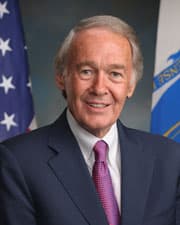
Full profile: /officials/M000133
Source: Congress.gov · FEC
Cosponsors (1)
Members who have signed on to support this bill since introduction. Source: Congress.gov.
Latest Action
The most recent step in the bill's legislative path. Committee Activity below shows referrals and reports; the full action-by-action history including floor proceedings lives at Congress.gov →
Read twice and referred to the Committee on Health, Education, Labor, and Pensions.
2026-06-09
Source: Congress.gov
Committee Activity
Currently in
- Senate Committee on Health, Education, Labor, and PensionsReferred To · 2026-06-09
Plain-English Summary
The federal government would be required to create a comprehensive national plan to tackle cancer in young adults, addressing prevention, research, and treatment strategies specific to this age group. The National Institutes of Health director would lead this effort to better understand why certain cancers affect younger people and how to improve their outcomes. This would help coordinate cancer research and care across the country for patients typically in their 20s, 30s, and 40s.
AI-assisted summary generated from the official bill metadata (title, subjects, actions) sourced from Congress.gov. Cached and reviewed. Always verify against the official text linked below.
Full Bill Text
Verbatim text published on Congress.gov via GovInfo. Use Cmd+F / Ctrl+F to search within this excerpt.
[Congressional Bills 119th Congress] [From the U.S. Government Publishing Office] [S. 4717 Introduced in Senate (IS)] <DOC> 119th CONGRESS 2d Session S. 4717 To amend the Public Health Service Act to require the Director of the National Institutes of Health to develop a national strategy to address young adult cancers, and for other purposes. _______________________________________________________________________ IN THE SENATE OF THE UNITED STATES June 9, 2026 Mr. Markey (for himself and Ms. Klobuchar) introduced the following bill; which was read twice and referred to the Committee on Health, Education, Labor, and Pensions _______________________________________________________________________ A BILL To amend the Public Health Service Act to require the Director of the National Institutes of Health to develop a national strategy to address young adult cancers, and for other purposes. Be it enacted by the Senate and House of Representatives of the United States of America in Congress assembled, SECTION 1. SHORT TITLE. This Act may be cited as the ``Asal Sayas National Strategy on Young Adult Cancers Act''. SEC. 2. FINDINGS. Congress finds that-- (1) cancer is the second most common cause of death in the United States, with over 2,000,000 new cases diagnosed annually and an expected 626,140 cancer deaths in 2026; (2) the incidence of cancer in individuals ages 18 to 49 (referred to in this section as ``young adults''), has risen 79 percent globally between 1990 and 2019, and mortality from cancer in that age group has risen by 28 percent; (3) the incidence of young adult cancers is predicted to increase by 30 percent globally from 2019 to 2030; (4) each year in the United States, approximately 200,000 young adults are diagnosed with cancer and approximately 30,000 young adults die from cancer; (5) the incidence of cancers in young adult women is now 82 percent higher than the incidence of cancers in young adult men, and cancers in young adult women has increased by 51 percent since 2002; (6) the economic cost in the United States of young adult cancers is estimated at $50,000,000,000 to $80,000,000,000 annually, due to costs relating to medical care, out-of-pocket expenses, lost productivity, caregiver burden, and premature deaths; (7) rates of young adult cancers are increasing significantly for digestive cancers, including colorectal and pancreatic cancers, lung cancers, gynecological cancers, including cervical, uterine, and ovarian cancers, breast cancers, prostate cancers, testicular cancers, thyroid cancers, melanoma, sarcoma, lymphoma, leukemia, and head and neck cancers; (8) colorectal cancers are the leading cause of young adult cancer-related deaths in the United States, and the second- leading cause of cancer overall; (9) lung cancer is the leading cause of cancer death in both men and women in the United States, and rates are rising among young adults, including for non-smokers, the majority of whom are women; (10) some cancers, including colorectal cancers and lung cancers, are more likely to be more advanced at diagnosis and have worse survival rates for young adults than for individuals in other age groups; (11) current eligibility criteria for cancer screening, including for colorectal and lung cancers, fail to identify many young adults who develop these diseases; (12) young adult cancers have significant short- and long- term social and economic impacts on individuals, their families, and society, and are linked to higher risk of long- term health problems in survivors; (13) the risk factors contributing to young adult cancers remain complex and may include interaction of genetic and biological factors, as well as lifestyle and environmental exposures, making identification of at-risk groups difficult; (14) young adults with cancer face an average delay of 7 months between symptom onset and treatment, versus 1 month for individuals…
Show the remaining 1,527 wordsHide the remaining 1,527 words
age 50 and over; and (15) barriers to diagnosis for young adult cancers include screening ineligibility linked to age, delay in presentation to primary care after symptom appearance, more frequent misattribution of symptoms to less severe conditions, and delay in referral to a cancer specialist. SEC. 3. NATIONAL STRATEGY TO ADDRESS YOUNG ADULT CANCERS. Section 402 of the Public Health Service Act (42 U.S.C. 282) is amended by adding the following: ``(p) Asal Sayas National Strategy on Young Adult Cancers.-- ``(1) In general.--Not later than 18 months after the date of enactment of the Asal Sayas National Strategy on Young Adult Cancers Act, the Director of NIH shall develop and submit to the relevant committees of Congress, and post on the websites of the National Institutes of Health and the clearinghouse established pursuant to paragraph (2)(G), a national strategy to address young adult cancers, to be known as the `Asal Sayas National Strategy on Young Adult Cancers'. ``(2) Requirements.--The national strategy under paragraph (1) shall-- ``(A) conduct and provide an inventory of current young adult cancer research programs, initiatives, and services across the National Institutes of Health and other Federal agencies; ``(B) develop a national education campaign for the public and health care professionals on the symptoms of, and risk factors for, young adult cancers, which shall-- ``(i) identify culturally relevant strategic priorities and objectives for such national education campaign; ``(ii) provide education to, and raise public awareness among, the general public about symptoms and risk factors for young adult cancers; and ``(iii) provide education to primary care, emergency, obstetrics and gynecology, pulmonary, and gastrointestinal health care professionals and other health care professionals regarding the signs, symptoms, and risk factors for the leading types of young adult cancers in the United States; ``(C) identify strategic research priorities and objectives across biomedical, behavioral, and environmental research areas, including by-- ``(i) conducting an assessment of young adult cancer research, including areas of opportunity with respect to basic, clinical, epidemiologic, and translational research; ``(ii) determining priorities and objectives to advance the diagnosis, treatment, cure, and prevention of young adult cancers; ``(iii) evaluating issues relating to improving access to care for young adults with cancer; ``(iv) identifying emerging scientific opportunities, rising public health challenges, and scientific knowledge gaps; and ``(v) evaluating opportunities for new technologies to identify risk factors, biomarkers, and targeted therapies for young adult cancers; ``(D) review, in carrying out subparagraph (B)-- ``(i) disease burden in the United States of young adult cancers in total and by cancer type, including the potential for an economic return on investment to the United States, due to lives saved, increased productivity, and decreased medical costs, from funding research, prevention, screening, diagnostics, treatment, and cures; ``(ii) differences among young adult cancers in total and by cancer type among sociodemographic groups, including by-- ``(I) sex; ``(II) race and ethnicity; ``(III) status as a veteran, member of the Armed Forces, or family member of a veteran or member of the Armed Forces; ``(IV) disability status; ``(V) professions that may increase cancer risk; and ``(VI) Tribal populations, rural populations, and medically underserved populations (as defined in section 330(b)(3)); ``(iii) multi-institute and multi-agency priorities, including coordination of research among the national research institutes, the national centers, and Federal agencies; ``(iv) barriers to participation in clinical trials for young adults; ``(v) special needs associated with treatment among the non-pediatric young adult population, such as concerns associated with preserving fertility, mental health issues, and employment; ``(vi) existing Federal resources, such as reports, databases, and guidance; and ``(vii) other factors the Director of NIH determines appropriate, in consultation with the Director of the National Cancer Institute, the heads of other national research institutes, and the heads of Federal agencies; ``(E) provide recommendations with respect to-- ``(i) advancing biomedical, lifestyle, and environmental research into the causes of young adult cancers, by type of cancer; ``(ii) improving methods for early detection and screening of young adult cancers, by type of cancer, including education campaigns for the public and health care professionals and resources to increase awareness of symptoms; ``(iii) improving screening guidance and the development of new diagnostics with respect to various types of young adult cancers; ``(iv) reducing barriers to insurance coverage of screening for young adult cancers; ``(v) ensuring timely reviews of cancer screening recommendations by the United States Preventive Services Task Force that assess research findings for cancers that are rising in young adults; ``(vi) applying technologies, including innovative electronic health record tools, to identify biomarkers and other risk factors and to target treatment options for young adult cancers; ``(vii) applying technologies, including innovative electronic health record tools, to increase the use by health care providers of recommendations for identification of symptoms, family history, hereditary syndromes, or other risk factors that could contribute to the young adult cancer diagnosis; ``(viii) evaluating current therapies and developing new treatments, including biomarker identification and precision medicine, for young adult cancers; ``(ix) addressing and disseminating prevention strategies; ``(x) addressing barriers to conducting research regarding young adult cancers; ``(xi) addressing barriers to participation in clinical trials for young adults with cancer; ``(xii) increasing efforts to improve medical education and knowledge among health care professionals of young adult cancers, including risk factors, symptoms, screening and early detection techniques, prevention, and treatment options; ``(xiii) establishing within the National Cancer Institute a National Centers of Excellence for Young Adult Cancers program (or a comparable alternative) that would create and support hubs across the United States for research, clinical care, and public and professional education; ``(xiv) supporting the psychosocial needs of individuals undergoing treatment for young adult cancers, including family, fertility preservation, and work-related issues; ``(xv) addressing the needs of caregivers of young adult cancer patients; and ``(xvi) other topics, as determined by the Director of NIH, in consultation with the Federal Coordinating Committee on Young Adult Cancers established under paragraph (3)(A); ``(F) describe opportunities for collaboration with Federal departments and agencies and the private sector, as appropriate; and ``(G) establish an online Federal clearinghouse to provide to the general public, patients, caregivers, health care professionals, and researchers information on young adult cancers, with resources, including-- ``(i) information on risk factors, symptoms, and screening eligibility; ``(ii) information regarding research findings, clinical trials, and research funding opportunities; and ``(iii) clinical practice guidelines for health care professionals. ``(3) Federal coordinating committee on young adult cancers.-- ``(A) In general.--In carrying out this subsection, the Director of NIH shall establish a committee, to be known as the `Federal Coordinating Committee on Young Adult Cancers'-- ``(i) to consult and provide input on the development of the national strategy under paragraph (1); and ``(ii) not less frequently than once every 2 years, to submit to the relevant committees of Congress a progress report regarding the implementation of such national strategy. ``(B) Membership.--The coordinating committee established under subparagraph (A) shall be composed of-- ``(i) the Director of the National Cancer Institute; ``(ii) the heads of other national research institutes, national centers, and offices within the National Institutes of Health, as determined appropriate by the Director of NIH, including the National Heart, Lung, and Blood Institute, the National Institute of Diabetes and Digestive and Kidney Diseases, the Eunice Kennedy Shriver National Institute of Child Health and Human Development, the National Human Genome Research Institute, the National Institute of Mental Health, the Office of Research on Women's Health, and the National Institute on Minority Health and Health Disparities; ``(iii) the Director of the Office of Science and Technology Policy; ``(iv) the Secretary of Health and Human Services; ``(v) the Director of the Centers for Disease Control and Prevention; ``(vi) the Administrator of the Centers for Medicare & Medicaid Services; ``(vii) the Commissioner of Food and Drugs; ``(viii) the Assistant Secretary for Mental Health and Substance Use; ``(ix) the Director of the Indian Health Service; ``(x) the Director of the Office of Minority Health of the Department of Health and Human Services; ``(xi) the Director of the Office on Women's Health of the Department of Health and Human Services; ``(xii) the Director of the Agency for Healthcare Research and Quality; ``(xiii) the Director of the Advanced Research Projects Agency-Health; ``(xiv) the Assistant Secretary of Defense for Health Affairs; ``(xv) the Under Secretary for Health for the Department of Veterans Affairs; ``(xvi) the Director of the Office of Science of the Department of Energy; ``(xvii) the Director of the National Science Foundation; ``(xviii) the Administrator of the Environmental Protection Agency; ``(xix) representatives of patient advocacy groups; ``(xx) representatives of academic research institutions; ``(xxi) representatives of the biomedical industry; ``(xxii) representatives and leaders of community health institutions; and ``(xxiii) others, as determined by the Director. ``(4) Definitions.--In this subsection: ``(A) Relevant committees of congress.--The term `relevant committees of Congress' means-- ``(i) the Committee on Health, Education, Labor, and Pensions of the Senate; ``(ii) the Committee on Finance of the Senate; ``(iii) the Committee on Appropriations of the Senate; ``(iv) the Committee on Energy and Commerce of the House of Representatives; ``(v) the Committee on Ways and Means of the House of Representatives; and ``(vi) the Committee on Appropriations of the House of Representatives. ``(B) Young adult.--The term `young adult' means an individual between the ages of 18 and 49.''. <all>
Related legislation
Bills by the same sponsor or covering overlapping subjects.
- S4831A bill to prohibit, or require disclosure of, the surveillance, monitoring, and collection of certain worker data by employers, and for other purposes.Referred to Committee · 2026-06-18
- S4833A bill to prohibit certain uses of automated decision systems by employers, and for other purposes.Referred to Committee · 2026-06-18
- S4814A bill to require the Secretary of Homeland Security to designate Haiti for temporary protected status.Referred to Committee · 2026-06-17
- S4799A bill to cap the amount authorized to be appropriated for the national defense budget for fiscal year 2027 at $750,000,000,000.Referred to Committee · 2026-06-16