S4782Referred to Committee
ReportScams.gov Act
Introduced
In Committee
3
Passed One Chamber4
Passed Both5
Signed into Law119th
Congress
2026-06-15
Introduced
1
Cosponsors
S
ⓘType
Sponsor
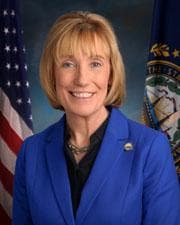
Margaret Wood Hassan
Democrat · NH · Senator
Votes with party: 73.7% (837 recorded votes)
Full profile: /officials/H001076
Source: Congress.gov · FEC
Cosponsors (1)
Members who have signed on to support this bill since introduction. Source: Congress.gov.
Latest Action
The most recent step in the bill's legislative path. Committee Activity below shows referrals and reports; the full action-by-action history including floor proceedings lives at Congress.gov →
Read twice and referred to the Committee on Homeland Security and Governmental Affairs.
2026-06-15
Source: Congress.gov
Committee Activity
Currently in
- Senate Committee on Homeland Security and Governmental AffairsReferred To · 2026-06-15
Plain-English Summary
The federal government would create an official priority goal focused on fighting scams, establish a committee to coordinate anti-scam efforts across agencies, and develop a national action plan with strategies to prevent fraud. A new government website would provide scam information and prevention resources to help the public recognize and avoid becoming victims of scams. This affects everyday Americans who are vulnerable to fraud schemes, as well as federal agencies that would need to work together on this initiative.
AI-assisted summary generated from the official bill metadata (title, subjects, actions) sourced from Congress.gov. Cached and reviewed. Always verify against the official text linked below.
Full Bill Text
Verbatim text published on Congress.gov via GovInfo. Use Cmd+F / Ctrl+F to search within this excerpt.
[Congressional Bills 119th Congress] [From the U.S. Government Publishing Office] [S. 4782 Introduced in Senate (IS)] <DOC> 119th CONGRESS 2d Session S. 4782 To establish a Federal Government priority goal, Scams Steering Committee, Scams Action Plan, and website to promote scams information and prevention, and for other purposes. _______________________________________________________________________ IN THE SENATE OF THE UNITED STATES June 15, 2026 Ms. Hassan (for herself and Mr. Scott of Florida) introduced the following bill; which was read twice and referred to the Committee on Homeland Security and Governmental Affairs _______________________________________________________________________ A BILL To establish a Federal Government priority goal, Scams Steering Committee, Scams Action Plan, and website to promote scams information and prevention, and for other purposes. Be it enacted by the Senate and House of Representatives of the United States of America in Congress assembled, SECTION 1. SHORT TITLE. This Act may be cited as the ``ReportScams.gov Act''. SEC. 2. DEFINITIONS. In this Act: (1) Appropriate congressional committees.--The term ``appropriate congressional committees'' means-- (A) the Committee on Homeland Security and Governmental Affairs of the Senate; (B) the Committee on Oversight and Government Reform of the House of Representatives; and (C) any other committees of jurisdiction, as determined appropriate by the Comptroller General. (2) Director.--The term ``Director'' means the Director of the Office of Management and Budget. (3) Federal scams action plan.--The term ``Federal Scams Action Plan'' means the Federal Scams Action Plan developed by the Scams Steering Committee under section 3(c). (4) Scam.--The term ``scam'' means a method of committing fraud, involving the use of deception or manipulation intended to achieve financial gain, regardless of whether any related payments or transactions are authorized or unauthorized. (5) Scams steering committee.--The term ``Scams Steering Committee'' means the interagency committee established under section 3(b). (6) Scams priority goal.--The term ``Scams Priority Goal'' means the Federal Government priority goal to reduce scams affecting the people of the United States established under section 3(a). (7) Scammer.--The term ``scammer'' means an individual, organization, or entity that engages in behavior that facilitates, commits, or attempts to commit a scam. (8) Spoofing.--The term ``spoofing'' means utilizing technological means, such as websites, email addresses, phone numbers, etc., to impersonate legitimate or trusted persons or organizations. (9) State.--The term ``State'' means any State of the United States, the District of Columbia, the Commonwealth of Puerto Rico, any territory or possession of the United States, any political subdivision, or any department, agency, or instrumentality thereof. SEC. 3. ESTABLISHMENT OF FEDERAL GOVERNMENT PRIORITY GOAL AND ACTION PLAN TO REDUCE SCAMS. (a) Establishment of Scams Priority Goal.-- (1) In general.--Not later than 90 days after the date of enactment of this Act, the Director shall, in accordance with section 1120(a) of title 31 United States Code, establish a Federal Government priority goal to reduce scams affecting the people of the United States. (2) Goal leaders.-- (A) In general.--Not later than 90 days after the date of enactment of this Act, the Director shall identify goal leaders for the Scams Priority Goal. (B) Selection.--The goal leaders identified under subparagraph (A) shall include the Deputy Director for Management at the Office of Management and Budget and the Deputy Secretary or equivalent of not fewer than 1 Federal department with a lead role in addressing scams. (b) Establishment of Scams Steering Committee.-- (1) In general.--Not later than 90 days after the date of enactment of this Act, the Director shall establish an interagency Scams Steering Committee, chaired by the goal leaders identified under subsection (a)(2)(A). (2) Members.--The members of the Scams Steering Committee shall include 1 or more distinct representatives from each of the following Federal agencies…
Show the remaining 2,648 wordsHide the remaining 2,648 words
responsible for reducing scams: (A) The Department of Justice. (B) The Federal Bureau of Investigation. (C) The Federal Reserve. (D) The Consumer Financial Protection Bureau. (E) The Federal Deposit Insurance Corporation. (F) The Federal Trade Commission. (G) The Department of Homeland Security. (H) Homeland Security Investigations. (I) The United States Secret Service. (J) The Department of the Treasury. (K) The Office of the Comptroller of the Currency. (L) The General Services Administration. (M) Any other appropriate Federal agency, as determined by the goal leaders. (c) Federal Scams Action Plan.--Not later than 180 days after the date of enactment of this Act, the Scams Steering Committee shall develop a Federal Scams Action Plan that-- (1) may use the expertise of relevant Federal departments, such as the Federal Bureau of Investigation, as well as any prior work completed toward cross-agency collaboration by relevant Federal departments with respect to scams prevention, education, reporting, assistance, and enforcement; and (2) shall include-- (A) the information required under section 1122(c) of title 31, United States Code; (B) a uniform, government-wide definition of scams that includes, at minimum, fraudulent activity involving the use of deception or manipulation intended to achieve financial gain, regardless of whether any related payment or transaction is authorized or unauthorized; (C) a related classification standard for scam types; (D) an initial baseline estimate of-- (i) the number and types of scams affecting the people of the United States; and (ii) the financial costs associated with such scams; (E) an ambitious 4-year target for reducing the number and cost of scams; (F) strategies and activities for the prevention and thwarting of scams, including scams education programs for the public and for private industry and investigation into scams and scam-related activity; and (G) strategies and activities for holding scam perpetrators accountable and supporting scam victims, including civil and criminal enforcement actions relating to scams and assistance and guidance for victims of scams. (d) Website.-- (1) In general.--Not later than 1 year after the date of enactment of this Act, the Scams Steering Committee shall establish a secure, centralized, publicly accessible website focused on scam prevention, reporting, and assistance that is easily recognizable and accessible, with the domain name reportscams.gov, which shall serve as the Federal Government's primary and centralized public-facing website relating to scams prevention, reporting, and assistance, through which the people of the United States can-- (A) access Federal Government resources relating to scams education and prevention; (B) access resources relating to assistance for victims of scams; and (C) report scams. (2) Information.--The website described in paragraph (1) shall contain, at a minimum, the following: (A) Published resources on scam prevention, including the following: (i) Specific scam awareness information.-- Information updated not less frequently than once every 90 days on recent trends in scams, as well as specific scams, to be aware of. (ii) Scam education.--Information and best practices aimed specifically at the public, including individual consumers, on how to be better aware of scams, how to recognize scams, how to avoid scams, and how to prevent personal financial loss associated with scams. (iii) Immediate actions to prevent scams and reduce vulnerabilities.--Information on how members of the public, when receiving suspicious outreach (such as phone calls and messages, emails, and letters)-- (I) should take immediate steps to prevent falling victim to a scam, including how best to immediately cease interaction with potential scammers; and (II) can identify potential vulnerabilities that may result from their interaction with a potential scammer, including potential financial vulnerabilities that may result from the interaction. (B) Information on government impersonation scams, including spoofing scams, including the following: (i) Descriptions and examples of common scams that involve fraudulent outreach from scammers purporting to be acting on behalf of a legitimate Federal Government entity. (ii) An explanation of how these scams can utilize spoofing techniques to impersonate trusted persons, organizations, and other entities. (iii) Verified contact information for common agencies that are often impersonated by scammers or associated with known scams-- (I) for the purpose of assisting members of the public who, after receiving suspicious outreach from a potential scammer, wish to proactively contact the relevant Federal agency via the verified contact information to verify the authenticity of any suspicious information or claims made as part of the suspicious outreach; and (II) including a clear statement that this information should only be used to contact the agency, and not to verify any potential outreach that a member of the public may have received. (C) Information on non-government entity impersonation scams, including spoofing scams, including the following: (i) Descriptions and examples of common scams that involve fraudulent outreach from scammers purporting to be acting on behalf of non-government entities, such as financial institutions, charities, retailers, and other entities. (ii) An explanation of how these scams can utilize spoofing techniques to impersonate trusted persons, organizations, and other entities. (iii) As appropriate, verified contact information for each non-government entity that is often impersonated by scammers or associated with known scams, if the non-government entity explicitly consents to publicly providing such information-- (I) for the purpose of assisting members of the public who, after receiving suspicious outreach from a potential scammer, wish to proactively contact the non-government entity via the verified information to verify the authenticity of any suspicious information or claims made as part of the suspicious outreach; and (II) including a clear statement that this information should only be used to contact the non-government entity, and not to verify any potential outreach that a member of the public may have received. (D) Information and resources relating to assistance for members of the public who have fallen victim to scams, including-- (i) resources on immediate and long-term steps to take if an individual suspects they have been scammed, with an emphasis on-- (I) how to ensure that their assets and personal information are immediately safeguarded; (II) any applicable personal actions that can be taken to thwart an ongoing scam; (III) how to ensure the long-term safety of their assets and information; (IV) how to seek financial and law enforcement assistance; and (V) how to attempt to recoup losses, as applicable; and (ii) contact information and relevant web links for the following organizations, so that members of the public may reach out for assistance: (I) Relevant Federal law enforcement agencies. (II) Relevant State law enforcement, including State Attorneys General and State Police and Investigative Services, subdivided by State. (III) As appropriate and within the Scams Steering Committee's discretion, relevant local law enforcement agencies. (IV) As appropriate and within the Scams Steering Committee's discretion, relevant State and local assistance agencies, with an emphasis on financial assistance, housing assistance, food assistance, elder assistance, and other forms of assistance. (V) Relevant organizations that provide mental health and crisis intervention, including suicide intervention and support. (VI) The National Elder Fraud Hotline. (VII) As appropriate and within the Scams Steering Committee's discretion, additional organizations that may provide relevant assistance to members of the public. (3) Reporting portal.--The website described in paragraph (1) shall include a single, secure, centralized Federal Government portal for scam reporting, through which members of the public can report scams and potential scams, that contains features and capabilities to accomplish the following: (A) Provide members of the public a process to directly and securely submit reports of scams that will be directed to the appropriate authorities for criminal law enforcement purposes, civil enforcement reporting purposes, and general tracking of scams for Federal Government purposes. (B) Receive reports under subparagraph (A) and ensure the reports are securely and expeditiously routed directly to-- (i) the appropriate Federal agencies for oversight, reporting, investigation, criminal law enforcement, and civil enforcement purposes; and (ii) the appropriate State Police Agency, or equivalent State-level law enforcement agency, for the jurisdiction in which the reporting individual resides. If no such agency exists in the jurisdiction in which the reporting individual resides, then the portal shall route the report to the most appropriate law enforcement agency with jurisdiction over criminal investigations. (C) With respect to reports routed under subsection (B), provide to the applicable Federal and State agencies-- (i) all information that was submitted with the report; (ii) the name and contact information of the reporter; (iii) the unique identifier under subparagraph (D)(iii); (iv) a request that the agency expeditiously reach out to the individual submitting the report; and (v) a clear statement that the information being provided in the report should be utilized to support any follow-on interactions between the individual submitting the report and the agency. (D) Provide a process through which members of the public providing a report under subparagraph (A) shall securely and expeditiously receive-- (i) confirmation of receipt of their submission; (ii) a copy of their submission; (iii) a unique identifier assigned to their submission; (iv) a list of what Federal and State agencies the submission has been routed to, as applicable; (v) an estimate of what Federal agency, if any, will reach out regarding their submission and when; (vi) an estimate of what State law enforcement agency, if any, will reach out with respect to their submission; (vii) information on how to subsequently follow-up on their submission with the appropriate Federal agency and State agencies; and (viii) a notice that in addition to reaching out to Federal and State law enforcement, the reporting individual may also contact local law enforcement, should they choose to do so. (E) Provide general resources and follow-on steps that members of the public can use following their submission, including-- (i) a referral to the assistance information on the website under paragraph (2); and (ii) information on filing a report with local or State law enforcement, separate from the portal, should they choose to do so. (e) Public Awareness Campaign.--Upon establishment of the website under subsection (d), the Scams Steering Committee shall undertake a public awareness campaign communicating the existence of and recommending use of the website. SEC. 4. QUARTERLY REPORTING AND CONGRESSIONAL NOTIFICATION. (a) Quarterly Progress Review.--Beginning not later than the date of the end of the first calendar-year quarter ending after publication of the Federal Scams Action Plan, the Director shall ensure quarterly progress reviews and updates to the Federal Scams Action Plan are completed and submitted to Performance.gov, in accordance with sections 1121 and 1122 of title 31, United States Code. (b) Publication and Submission to Congress.--Upon completion and submission of each quarterly progress review under subsection (a), the Director shall publish on the website established under section 3(d) and transmit to the Committee on Homeland Security and Governmental Affairs of the Senate and the Committee on Oversight and Government Reform of the House of Representatives the following: (1) An electronic copy of the updated Federal Scams Action Plan. (2) A summary of the quarterly performance review. SEC. 5. ANNUAL REPORT. (a) In General.--Not later than 1 year after the date of enactment of this Act, and annually thereafter, the Scams Steering Committee shall publicly publish and submit to Congress, including the Committee on Homeland Security and Governmental Affairs of the Senate and the Committee on Oversight and Government Reform of the House of Representatives, a report that includes the following: (1) Data related to scams reported to the Federal Government over the prior year, including, at a minimum, the number of scams reported, a breakdown of scams by type, the financial loss associated (or estimated) with scams reported over the prior year, demographics related to victims and targets of scams, relevant knowledge gained regarding the perpetrators of scams, and any criminal or civil enforcement data relating to scams during the 1-year period immediately preceding the date of the report. (2) Trends related to scams reported during the 1-year period immediately preceding the date of the report. (3) A summary of large-scale Federal Government investigations related to scams during the 1-year period immediately preceding the date of the report. (4) Regulatory and legislative recommendations to prevent and address scams. (5) Additional information and recommendations, as appropriate. (b) Redacted Publication.--The annual report required to be publicly published under subsection (a) may be redacted to remove sensitive and classified material. SEC. 6. INTERAGENCY COORDINATION TOOLS FOR THE SCAMS STEERING COMMITTEE. (a) Purpose.--The authorities under this section shall serve to facilitate effective cross-agency implementation of the Scams Priority Goal. (b) Interagency Transfer Authority.-- (1) In general.--Notwithstanding section 1532 of title 31, United States Code, and subject to the limitations in this subsection, any agency represented on the Scams Steering Committee may transfer to another such agency not more than $10,000,000 during a fiscal year to support activities necessary to implement the Scams Priority Goal, including-- (A) interagency coordination and governance; (B) shared analytical, data, or technological capabilities; (C) development, operation, or improvement of the website under section 3(d); and (D) activities outlined in the Federal Scams Action Plan. (2) Limitations.--A transfer under paragraph (1) shall be-- (A) subject to the prior approval of the Director of the Office of Management and Budget; (B) made only from funds available for the same purpose for which the receiving agency will use the funds; (C) treated as an intra-governmental reimbursable transaction, and merged with the receiving appropriation; and (D) reported to the Committee on Appropriations of the Senate and the Committee on Appropriations of the House of Representatives not later than 30 days after execution. (3) Rule of construction.--Nothing in this subsection shall be construed to authorize any transfer of funds between appropriations that is barred by any other provision of law. (c) Expedited Direct Hire Authority.-- (1) In general.--The head of any agency represented on the Scams Steering Committee may use direct-hire authority, in accordance with section 3304 of title 5, United States Code, to appoint employees to positions necessary to carry out the duties and responsibilities of the Steering Committee, including-- (A) data analysis, cybersecurity, financial crime analysis, user experience design, and fraud detection specialists; (B) program and project management personnel; and (C) other positions the Director determines are critical to implementing the Federal Scams Action Plan. (2) Limitations.--The direct-hire authority under paragraph (1) shall-- (A) terminate on the date that is 5 years after the date of enactment of this Act; (B) be available only for positions at or below the GS-15 level of the General Schedule under subchapter III of chapter 53 of title 5, United States Code; and (C) be exercised in accordance with all applicable provisions of title 5, United States Code, unless otherwise provided in this Act. SEC. 7. GAO REPORTS ON IMPLEMENTATION. (a) In General.--Not later than 2 years after the date of enactment of this Act, and 2 years thereafter, the Comptroller General of the United States shall conduct a review of Federal efforts to implement the Scams Priority Goal and submit to the appropriate congressional committees a report described in subsection (b). (b) Report Contents.--Each report submitted under subsection (a) shall include an assessment of-- (1) the extent to which the Office of Management and Budget and Federal agencies represented on the Scams Steering Committee have implemented the requirements under sections 1120 and 1122 of title 31, United States Code, including-- (A) the establishment of the Scams Priority Goal; (B) designation of goal leaders; (C) formation and operation of the Scams Steering Committee; and (D) publication of the Federal Scams Action Plan and related quarterly updates on Performance.gov; (2) the effectiveness of the Scams Steering Committee in improving interagency coordination and collaboration, including the development of shared priorities, data standards, and coordinated actions; (3) the development, operation, usability, and performance of the website under section 3(d); (4) progress made toward meeting the 4-year target established in the Federal Scams Action Plan for reducing the number and cost of scams, including an assessment of the reliability and sufficiency of supporting data; (5) challenges, barriers, or inefficiencies impeding implementation of the Scams Priority Goal; and (6) recommendations the Comptroller General determines appropriate to improve interagency coordination, public transparency, performance measurement, or overall effectiveness of scam prevention and response efforts. <all>
Related legislation
Bills by the same sponsor or covering overlapping subjects.
- S2658Medication Affordability and Patent Integrity ActReferred to Committee · 2026-06-17
- S4759Tax Relief for Innocent Spouses ActReferred to Committee · 2026-06-11
- S4736Multigenerational Care and Support ActReferred to Committee · 2026-06-10
- S4578Gateway to Careers Act of 2026Referred to Committee · 2026-05-20