S4915Referred to Committee
AI Labeling Act of 2026
Introduced
In Committee
3
Passed One Chamber4
Passed Both5
Signed into Law119th
Congress
2026-06-24
Introduced
2
Cosponsors
S
ⓘType
Sponsor
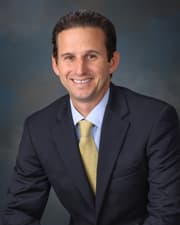
Brian Schatz
Democrat · HI · Senator
Votes with party: 84.2% (841 recorded votes)
Full profile: /officials/S001194
Source: Congress.gov · FEC
Cosponsors (2)
Members who have signed on to support this bill since introduction. Source: Congress.gov.
Latest Action
The most recent step in the bill's legislative path. Committee Activity below shows referrals and reports; the full action-by-action history including floor proceedings lives at Congress.gov →
Read twice and referred to the Committee on Commerce, Science, and Transportation.
2026-06-24
Source: Congress.gov
Committee Activity
Currently in
- Senate Committee on Commerce, Science, and TransportationReferred To · 2026-06-24
Plain-English Summary
The legislation would require companies and individuals to clearly label content created or significantly altered by artificial intelligence so that people know when they're viewing AI-generated material rather than authentic human-created content. This would affect social media platforms, news outlets, advertisers, and anyone else publishing AI-generated images, videos, audio, or text online. The requirement aims to help the public make informed decisions about what they're reading, watching, or listening to while combating potential misinformation and deception.
AI-assisted summary generated from the official bill metadata (title, subjects, actions) sourced from Congress.gov. Cached and reviewed. Always verify against the official text linked below.
Full Bill Text
Verbatim text published on Congress.gov via GovInfo. Use Cmd+F / Ctrl+F to search within this excerpt.
[Congressional Bills 119th Congress] [From the U.S. Government Publishing Office] [S. 4915 Introduced in Senate (IS)] <DOC> 119th CONGRESS 2d Session S. 4915 To require disclosures for covered AI-generated content, and for other purposes. _______________________________________________________________________ IN THE SENATE OF THE UNITED STATES June 24, 2026 Mr. Schatz (for himself, Mr. Curtis, and Mr. Warner) introduced the following bill; which was read twice and referred to the Committee on Commerce, Science, and Transportation _______________________________________________________________________ A BILL To require disclosures for covered AI-generated content, and for other purposes. Be it enacted by the Senate and House of Representatives of the United States of America in Congress assembled, SECTION 1. SHORT TITLE. This Act may be cited as the ``AI Labeling Act of 2026''. SEC. 2. REQUIRED DISCLOSURES FOR COVERED AI-GENERATED CONTENT. (a) Requirements for Providers of Generative Artificial Intelligence Systems That Produce Covered AI-Generated Content.-- (1) In general.--Each provider of a generative artificial intelligence system that, using any means or facility of interstate or foreign commerce, produces covered AI-generated content shall do the following: (A) Labeling.--The provider shall label the covered AI-generated content with a clear and conspicuous disclosure that-- (i) identifies that the output includes covered AI-generated content; (ii) to the extent technically and economically feasible, is accessible to individuals with disabilities; and (iii) is embedded in the content. (B) Machine-readable disclosure.-- (i) In general.--The provider shall bind or embed within the covered AI-generated content a machine-readable disclosure that, at a minimum-- (I) identifies-- (aa) the content that is covered AI-generated content; (bb) the system and the version used to create or modify the covered AI-generated content; (cc) the date and time the covered AI-generated content was created or modified; and (dd) any other relevant information; and (II) conforms to or is interoperable with the standards specified by the Commission and the Working Group established under section 7. (ii) Clarification.--The disclosure required under clause (i) shall not be required to include the personally identifiable information of the user of the generative artificial intelligence system. (C) Detection.--The provider shall ensure that a user or covered online platform can detect, without undue financial burden, that the output generated by the provider's generative artificial intelligence system includes covered AI-generated content and view information required under subparagraph (B) by-- (i) ensuring that the covered AI-generated content is detectable by one or more widely available detection tools and making available to users or covered online platforms clear instructions on how to access and operate such tools; or (ii) if no such detection tool exists, providing to users and covered online platforms access to a tool to enable detection of covered AI-generated content and providing clear instructions on how to access and operate such tool. (D) Collaboration with covered online platforms.-- The provider shall collaborate with any covered online platform to assist the covered online platform in complying with the obligations described in subsection (b) with respect to any content created or substantially modified by the generative artificial intelligence system of the provider. (2) Exemption for internal use.--The requirements of this subsection shall not apply to covered AI-generated content produced by a provider of a generative artificial intelligence system if the covered AI-generated content-- (A) is generated or used solely for internal research and development purposes; and (B) is not intended for public release or commercial deployment. (b) Covered Online Platforms.--Each covered online platform shall-- (1) ensure that any covered AI-generated content displayed on the platform that incorporates a machine-readable disclosure described in subsection (a)(1)(B) is clearly and conspicuously identified as covered AI-generated content; (2) not tamper with or remove any such disclosure, including when such covered…
Show the remaining 4,003 wordsHide the remaining 4,003 words
AI-generated content is transferred to or otherwise shared to another online platform; (3) provide to any user sharing content the option to make content provenance information specified in subsection (a)(1)(B)(i)(I), as well as any additional user-specified content provenance information, readily available to other users of such platform; (4) make a good faith effort to combat the liar's dividend by implementing strategies recommended by the Commission; and (5) to the extent technically and economically feasible, ensure that information contained in the identification described in paragraph (1) or content provenance information made available under paragraph (3) is accessible, including to individuals with disabilities. (c) Artificial Intelligence Chatbot Disclosure.--Each person who, through any means or facility of interstate or foreign commerce, makes available to users an artificial intelligence chatbot shall include a clear and conspicuous disclosure that identifies the system as an artificial intelligence chatbot. (d) Enforcement by the Commission.-- (1) Unfair or deceptive acts or practice.--A violation of this section shall be treated as a violation of a rule defining an unfair or deceptive act or practice under section 18(a)(1)(B) of the Federal Trade Commission Act (15 U.S.C. 57a(a)(1)(B)). (2) Powers of the commission.-- (A) In general.--The Commission shall enforce this section in the same manner, by the same means, and with the same jurisdiction, powers, and duties as though all applicable terms and provisions of the Federal Trade Commission Act (15 U.S.C. 41 et seq.) were incorporated into and made a part of this section. (B) Privileges and immunities.--Any person who violates this section or a regulation promulgated thereunder shall be subject to the penalties and entitled to the privileges and immunities provided in the Federal Trade Commission Act (15 U.S.C. 41 et seq.). (C) Authority preserved.--Nothing in this Act shall be construed to limit the authority of the Commission under any other provision of law. (D) Regulations and guidance.-- (i) Authority to identify exceptions.--The Commission may promulgate regulations in accordance with section 553 of title 5, United States Code, to specify exceptions from the requirements of this section, such as for de minimis pieces of content. (ii) Establishment of specified safe harbors.-- (I) In general.--The Commission may specify interoperable standards that comply with the requirements of this section. (II) Deemed compliance.--Each person who makes available a generative artificial intelligence system or covered online platform shall be deemed in compliance with the requirements of this section by following the standards established by the Commission under subclause (I). SEC. 3. PROTECTION OF DISCLOSURES. (a) Prohibitions.-- (1) Prohibition on fraudulent disclosure.--No person shall knowingly and with the intent or substantial likelihood of deceiving a third party, enable, facilitate, or conceal the circumvention or falsification of a disclosure required under section 2, by adding a disclosure, or other information about the provenance of covered AI-generated content, that the person knows to be false. (2) Prohibition on fraudulent distribution.--No person shall knowingly and for financial benefit, enable, facilitate, or conceal the circumvention or falsification of a disclosure required under section 2 by knowingly distributing-- (A) covered AI-generated content that does not include the required disclosure; or (B) non-AI-generated content that includes such disclosure. (3) Prohibition on products and services for circumvention or falsification.--No person shall deliberately manufacture, import, or offer to the public a technology, product, service, device, component, or part thereof that-- (A) is primarily designed or produced and promoted for the purpose of circumventing, removing, or tampering with any disclosure required under section 2, or for adding any such disclosure to non-AI-generated content, with the intent or substantial likelihood of deceiving a third party about the provenance of a piece of digital content; (B) has only limited commercially significant or expressive purpose or use other than to circumvent, remove, or tamper with a disclosure required under section 2, or to add any such disclosure to non-AI- generated content, and is promoted for such purposes; or (C) is marketed by such person or another person acting in concert with such person with the person's knowledge for use in circumventing, removing, or tampering with a disclosure required under section 2, or for use in adding any such disclosure to non-AI- generated content, with an intent to deceive a third party about the provenance of a piece of digital content. (b) Exemptions.-- (1) In general.--Nothing in subsection (a) shall inhibit the ability of any individual to access, read, or review a disclosure or the content provenance or other information contained therein. (2) Exception for nonprofit libraries, archives, and educational institutions.-- (A) In general.--Except as otherwise provided in this subsection, subsection (a) shall not apply to a nonprofit library, archives, or educational institution that generates, distributes, or otherwise handles covered AI-generated content. (B) Commercial advantage, financial gain, or tortious conduct.--The exception described in subparagraph (A) shall not apply to a nonprofit library, archive, or educational institution that willfully, for the purpose of commercial advantage, financial gain, or in furtherance of tortious conduct, violates a prohibition described in subsection (a), except that such nonprofit library, archive, or educational institution shall-- (i) for the first offense, be subject to the civil remedies described in section 4; and (ii) for repeated or subsequent offenses, in addition to the civil remedies described in section 4, forfeit the exemption provided under subparagraph (A). (C) Circumventing technologies.--This paragraph may not be used as a defense to a claim under paragraph (3) of subsection (a), nor may this paragraph permit a nonprofit library, archive, or educational institution to manufacture, import, offer to the public, provide, or otherwise traffic in any technology, product, service, component, or part thereof, that circumvents a disclosure required under section 2. (D) Qualifications of libraries and archives.--In order for a library or archive to qualify for the exemption described in subparagraph (A), the collections of the library or archive shall be-- (i) open to the public; or (ii) available not only to researchers affiliated with the library or archive or with the institution of which it is a part, but also to other persons doing research in a specialized field. (3) Reverse engineering.--A researcher acting in good faith may circumvent, remove, add, or tamper with a disclosure required under section 2 for the purpose of improving or testing the robustness of such disclosures, or for improving or testing the robustness of detection tools. (4) Law enforcement, intelligence, and other government activities.--The prohibitions described in subsection (a) shall not prohibit the lawfully authorized investigative, protective, information security, or intelligence activity of an officer, agent, or employee of the United States, a State, or a political subdivision of a State, or a person acting pursuant to a contract with the United States, a State, or a political subdivision of a State. SEC. 4. ENFORCEMENT BY THE ATTORNEY GENERAL OF THE UNITED STATES. (a) Civil Action.--The Attorney General may bring a civil action in an appropriate district court of the United States against any person who violates section 3(a). (b) Powers of the Court.--In a civil action brought under subsection (a), the court-- (1) may grant a temporary or permanent injunction on such terms as the court determines reasonable to prevent or restrain a violation of section 3(a), but may not impose a prior restraint on free speech or the press protected under the First Amendment to the Constitution of the United States; (2) at any time while the civil action is pending, may order the impounding, on such terms as the court determines reasonable, of any device or product that is in the custody or control of the alleged violator and that the court has reasonable cause to believe was involved in a violation of section 3(a); (3) may award damages under subsection (c); (4) in its discretion, may allow the recovery of costs against any party other than the United States or an officer thereof; and (5) may, as part of a final judgment or decree finding a violation of section 3(a), order the remedial modification or the destruction of any device or product involved in the violation that is in the custody or control of the violator or that has been impounded under paragraph (2) of this subsection. (c) Award of Damages.-- (1) In general.--Except as otherwise provided in this section, a person committing a violation of section 3(a) is liable for statutory damages as provided in paragraph (2) of this subsection. (2) Statutory damages.-- (A) Election of amount based on number of acts of circumvention.--At any time before final judgment is entered in a civil action brought under subsection (a), the Attorney General may elect to recover an award of statutory damages for each violation of section 3(a) in the sum of not more than $2,500 per act of circumvention, device, product, component, offer, or performance of service, as the court considers just. (B) Election of amount; total amount.--At any time before final judgment is entered in a civil action brought under subsection (a), the Attorney General may elect to recover an award of statutory damages for each violation of section 3(a) in the sum of not more than $25,000. (3) Repeated violations.--In a civil action brought under subsection (a), if the Attorney General sustains the burden of proving, and the court finds, that a person has violated section 3(a) within 3 years after a final judgment was entered against the person for another such violation, the court may increase the award of damages up to triple the amount that would otherwise be awarded, as the court considers just. (4) Innocent violations.-- (A) In general.--The court, in its discretion, may reduce or remit the total award of damages under paragraph (2) if the court finds that the violator was not aware and had no reason to believe that the violator's acts constituted a violation. (B) Nonprofit libraries, archives, educational institutions, and public broadcasting entities.--In the case of a nonprofit library, archive, educational institution, or public broadcasting entity (as defined in section 118(f) of title 17, United States Code), the court shall remit damages under paragraph (2) if the library, archive, educational institution, or public broadcasting entity sustains the burden of proving, and the court finds, that the library, archive, educational institution, or public broadcasting entity was not aware and had no reason to believe that its acts constituted a violation. (5) Duplicative awards.--No compensatory damages may be awarded under this section if compensatory damages have been awarded under section 5 or 6 against the same defendant for the same conduct. SEC. 5. ENFORCEMENT BY STATES. (a) Civil Action.--If the attorney general of a State has reason to believe that an interest of the residents of that State has been or may be adversely affected by a violation of section 3(a), the attorney general of the State may bring a civil action in the name of the State, or as parens patriae on behalf of the residents of the State, in an appropriate district court of the United States. (b) Relief.-- (1) In general.--In a civil action brought under subsection (a), the court may award relief in accordance with section 4(c). (2) Duplicative awards.--No compensatory damages may be awarded under this section if compensatory damages have been awarded under section 4 or 6 against the same defendant for the same conduct. (c) Rights of Attorney General and Commission.-- (1) In general.--Except as provided in paragraph (4), the attorney general of a State shall notify the Attorney General of the United States and the Commission in writing prior to initiating a civil action under subsection (a). (2) Contents.--The notification required by paragraph (1) with respect to a civil action shall include a copy of the complaint to be filed to initiate the civil action. (3) Intervention.--Upon receiving a notification under paragraph (1), the Attorney General may intervene in the civil action in accordance with subsection (e). (4) Exception.--If it is not feasible for the attorney general of a State to provide the notification required by paragraph (1) before initiating a civil action under subsection (a), the attorney general of the State shall notify the Attorney General of the United States and the Commission immediately upon instituting the civil action. (d) Actions by Attorney General.--If the Attorney General of the United States institutes a civil action under section 4(a) for a violation of section 3(a), no attorney general of a State may, during the pendency of the civil action, institute a civil action against any defendant named in the complaint in the civil action instituted by the Attorney General of the United States for a violation of section 3(a) that is alleged in the complaint. (e) Intervention by Attorney General.--The Attorney General of the United States may intervene in any civil action brought by the attorney general of a State under subsection (a) as a matter of right pursuant to the Federal Rules of Civil Procedure, and upon intervening be heard on all matters arising in the civil action and file petitions for appeal of a decision in the civil action. (f) Investigatory Powers.--Nothing in this section may be construed to prevent the attorney general of a State from exercising the powers conferred on the attorney general by the laws of the State to-- (1) conduct investigations; (2) administer oaths or affirmations; or (3) compel the attendance of witnesses or the production of documentary or other evidence. (g) Actions by Other State Officials.-- (1) In general.--In addition to civil actions brought by an attorney general of a State under subsection (a), any other officer of a State who is authorized by the State to do so may bring a civil action in the same manner, subject to the same requirements and limitations that apply under this section to civil actions brought by an attorney general of a State. (2) Savings provision.--Nothing in this subsection may be construed to prohibit an authorized official of a State from initiating or continuing any proceeding in a court of the State for a violation of any civil or criminal law of the State. SEC. 6. ENFORCEMENT BY PRIVATE PARTIES. (a) Civil Action.--A provider of a generative artificial intelligence system or covered online platform who is harmed by a violation of section 3(a) using that system or platform may bring a civil action against the violator in an appropriate district court of the United States. (b) Relief.-- (1) In general.--In a civil action brought under subsection (a), the court may award relief in accordance with section 4(c). (2) Duplicative awards.--No compensatory damages may be awarded under this section if compensatory damages have been awarded under section 4 or 5 against the same defendant for the same conduct. (c) Rights of Attorney General and Commission.-- (1) In general.--The provider of a generative artificial intelligence system or covered online platform shall notify the Attorney General and the Commission in writing prior to initiating a civil action under subsection (a). (2) Contents.--The notification required by paragraph (1) with respect to a civil action shall include a copy of the complaint to be filed to initiate the civil action. (3) Intervention.--Upon receiving a notification under paragraph (1), the Attorney General may intervene in the civil action in accordance with subsection (e). (d) Actions by Attorney General.--If the Attorney General institutes a civil action under section 4(a) for a violation of section 3(a), no provider of a generative artificial intelligence system or covered online platform may, during the pendency of the civil action, institute a civil action against any defendant named in the complaint in the action instituted by the Attorney General for a violation of section 3(a) that is alleged in the complaint. (e) Intervention by Attorney General.--The Attorney General may intervene in any civil action brought by a provider of a generative artificial intelligence system or covered online platform under subsection (a) as a matter of right pursuant to the Federal Rules of Civil Procedure, and upon intervening be heard on all matters arising in the civil action and file petitions for appeal of a decision in the civil action. SEC. 7. AI-GENERATED CONTENT CONSUMER TRANSPARENCY WORKING GROUP. (1) Establishment.--Not later than 90 days after the date of enactment of this section, the Director of the National Institute of Standards and Technology (in this section referred to as the ``Director''), in coordination with the Commission, shall establish the AI-generated content consumer transparency working group (in this section referred to as the ``Working Group''). (2) Membership.--The Working Group shall include members from the following: (A) Relevant Federal agencies. (B) Developers of any generative artificial intelligence system. (C) Private sector groups engaged in the development of content detection and content provenance standards, audiovisual media formats, and open-source implementation of such standards and formats. (D) Social media platforms and other covered online platforms. (E) Academic institutions and other relevant entities. (F) Privacy advocates and experts. (G) Media organizations, including news publishers and image providers. (H) Technical experts in digital forensics, cryptography, content manipulation, digital disability accessibility, and secure digital content and delivery. (I) User experience designers and consumer behavior experts or consumer psychologists. (J) Groups or individuals representing victims affected by covered AI-generated content. (K) Any other entity determined appropriate by the Director or by other relevant Federal agencies. (3) Coordination and delegation of duties.--The Working Group shall be convened by the Director, who shall delegate leadership on particular duties (or components of such duties) to the National Institute of Standards and Technology and to its existing content provenance workstreams, to the Commission, or to other relevant Federal agencies, as appropriate. (4) Duties.--The duties of the Working Group shall include the following: (A) Providing technical standards for identifying and labeling covered AI-generated content, including by considering existing, or developing new, standards that assist with identifying, maintaining, interpreting, and displaying content provenance information, and establishing guidelines and best practices for covered online platforms to implement such standards and the Commission to enforce the provisions of this Act. (B) Considering how to ensure any labels and content provenance information are, to the extent economically and technically feasible-- (i) indelible, tamper-resistant, and tamper-evident to improve accuracy and ease of identification; and (ii) interoperable across all covered online platforms, widely used content-creation software applications, and other digital ecosystem considerations that are necessary to maintain disclosure integrity when transferring from one online platform, software application, operating system, or device to another. (C) Providing the Commission with guidance regarding-- (i) the technical and economic feasibility of the requirements of this Act; and (ii) the detection of covered AI-generated content, including by determining-- (I) reasonable criteria for detection accuracy; (II) what widely available tools, if any, meet the criteria described in subclause (I); and (III) any additional information that should be included within the machine readable disclosures required by section 2(a)(1)(B)(i)(I)(dd). (D) In order to inform enforcement of this Act, providing to the Commission clarifications and examples of digital content (which the Commission shall distribute to covered online platforms or providers of any generative artificial intelligence system) that-- (i) is created or substantially modified by generative artificial intelligence systems; (ii) has had its meaning materially added, removed, or altered by a generative artificial intelligence system; (iii) is realistic enough such that a reasonable person would not necessarily assume the content was created or substantially modified by a generative artificial intelligence system; and (iv) is not considered covered AI-generated content and would not require the disclosures required by section 2. (E) Developing recommendations for content detection and secure content provenance practices for any content that is produced by a generative artificial intelligence system and is not covered under the requirements of this Act, including text. (F) Developing research and evidence regarding-- (i) the impact of covered AI-generated content and required disclosures on consumer behavior; and (ii) how standards and guidelines can contribute to an information environment that is transparent and not overwhelming for consumers. (G) Supporting the development of guidelines and best practices to address circumvention techniques and improve the enforcement of the requirements of this Act. (H) Providing the Commission with guidelines and best practices regarding how covered online platforms can combat the liar's dividend, including strategies to help ensure that non-AI-generated content is not falsely labeled as covered AI-generated content. (5) Standards.--Not later than 1 year after the date on which the Working Group is established under paragraph (1), the Working Group shall publish technical standards, guidelines, and recommendations to implement and enforce the provisions of this Act, taking into account the criteria described in paragraph (4) and the relevant expertise of the members of the Working Group. (6) Report to congress.--Not later than 180 days after the Working Group publishes the standards under paragraph (5), the Director shall submit to the Committee on Commerce, Science, and Transportation of the Senate, the Committee on Energy and Commerce of the House of Representatives, and the Committee on Science, Space, and Technology of the House of Representatives a report that includes recommendations for legislative action. (7) Sunset.--The working group shall terminate 60 days after the date on which the Director submits the report required by paragraph (6), and may be reconvened periodically at the discretion of the Director or the Commission to consider further developments in relevant technologies and research. SEC. 8. DEFINITIONS. In this Act: (1) Artificial intelligence chatbot.--The term ``artificial intelligence chatbot'' means a generative artificial intelligence system with which users can interact by or through an interface that approximates or simulates textual, audio, or visually based conversation, including a system that-- (A) through an application programming interface, or similar direct connection, publicly posts digital content or text; or (B) integrates with a search engine to provide a conversational search experience. (2) Commission.--The term ``Commission'' means the Federal Trade Commission. (3) Content provenance.--The term ``content provenance'' means-- (A) information about the origin of a piece of content and the history of modifications to the content that is in a format that is compliant with widely adopted guidelines or specifications promulgated by an established standards-setting body; or (B) data that is embedded into digital content, or that is included in the metadata of the digital content, for the purpose of verifying the authenticity or history of modification of the digital content. (4) Covered AI-generated content.--The term ``covered AI- generated content'' means digital content that is created or substantially modified by a generative artificial intelligence system such that-- (A) the use of the system materially alters, adds, or removes the meaning or significance that a reasonable person would interpret from the content; and (B) a reasonable person would believe that the content is not generated using a generative artificial intelligence system. (5) Covered online platform.--The term ``covered online platform'' means any public-facing website or software application available to users that-- (A) predominantly provides a forum for user-to-user sharing or searching of content (including covered AI- generated content), including a social media service, social network, search engine, or content aggregation service available to users; and (B) either-- (i) at any point during the preceding 12 months, has at least 10,000,000 unique monthly users or subscribers in the United States; or (ii) during the most recently completed taxable year, had more than $1,500,000,000 gross revenue. (6) Digital content.--The term ``digital content'' means an image, video, or audio content, or any combination thereof, that exists in the form of digital data. (7) Generative artificial intelligence system.--The term ``generative artificial intelligence system'' means any system or software application that uses artificial intelligence (as defined in section 238(g) of the John S. McCain National Defense Authorization Act for Fiscal Year 2019) to create or substantially modify digital content. (8) Liar's dividend.--The term ``liar's dividend'' means, with respect to covered AI-generated content, the benefit that a bad actor may receive or otherwise gain by falsely claiming that non-AI-generated content is covered AI-generated content. (9) Machine-readable.--The term ``machine-readable'' has the meaning given such term in section 3502 of title 44, United States Code. (10) Non-AI-generated content.--The term ``non-AI-generated content'' means content that was not created or substantially modified by a generative artificial intelligence system. (11) Open-source.--The term ``open-source'' means, with respect to software, a software project with source code that is publicly available for anyone to view, modify, and distribute. <all>
Related legislation
Bills by the same sponsor or covering overlapping subjects.
- S4926A bill to amend the Omnibus Crime Control and Safe Streets Act of 1968 to provide grants for State firearms dealer licensing programs, and for other purposes.Referred to Committee · 2026-06-24
- S4830A bill to designate the facility of the United States Postal Service located at 86-014 Farrington Highway in Waianae, Hawaii, as the "United States Representative Colleen Hanabusa Post Office Building".Referred to Committee · 2026-06-18
- S4610Pacific POWER ActReferred to Committee · 2026-06-17
- S4695CONSENT ActReferred to Committee · 2026-06-08