S5050Referred to Committee
Expanding AI Voices Act
Introduced
In Committee
3
Passed One Chamber4
Passed Both5
Signed into Law119th
Congress
2026-07-21
Introduced
1
Cosponsors
S
ⓘType
Sponsor
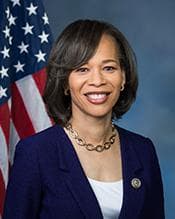
Lisa Blunt Rochester
Democrat · DE · Senator
Votes with party: 86.6% (863 recorded votes)
Full profile: /officials/B001303
Source: Congress.gov · FEC
Cosponsors (1)
Members who have signed on to support this bill since introduction. Source: Congress.gov.
Latest Action
The most recent step in the bill's legislative path. Committee Activity below shows referrals and reports; the full action-by-action history including floor proceedings lives at Congress.gov →
Read twice and referred to the Committee on Commerce, Science, and Transportation.
2026-07-21
Source: Congress.gov
Committee Activity
Currently in
- Senate Committee on Commerce, Science, and TransportationReferred To · 2026-07-21
Plain-English Summary
The bill would fund colleges and universities to build up their artificial intelligence research programs through partnerships and training, helping create a stronger community of AI researchers and innovators across the country. It aims to boost America's capacity in AI development by supporting institutions that want to expand their AI capabilities and collaborate with each other. The funding would help prepare students and researchers for careers in this rapidly growing field.
AI-assisted summary generated from the official bill metadata (title, subjects, actions) sourced from Congress.gov. Cached and reviewed. Always verify against the official text linked below.
Full Bill Text
Verbatim text published on Congress.gov via GovInfo. Use Cmd+F / Ctrl+F to search within this excerpt.
[Congressional Bills 119th Congress] [From the U.S. Government Publishing Office] [S. 5050 Introduced in Senate (IS)] <DOC> 119th CONGRESS 2d Session S. 5050 To support an interdisciplinary research community for the advancement of artificial intelligence and AI-powered innovation through partnerships and capacity building at certain institutions of higher education and other institutions, and for other purposes. _______________________________________________________________________ IN THE SENATE OF THE UNITED STATES July 21, 2026 Ms. Blunt Rochester (for herself and Mr. Sheehy) introduced the following bill; which was read twice and referred to the Committee on Commerce, Science, and Transportation _______________________________________________________________________ A BILL To support an interdisciplinary research community for the advancement of artificial intelligence and AI-powered innovation through partnerships and capacity building at certain institutions of higher education and other institutions, and for other purposes. Be it enacted by the Senate and House of Representatives of the United States of America in Congress assembled, SECTION 1. SHORT TITLE. This Act may be cited as the ``Expanding AI Voices through Capacity Building Act'' or the ``Expanding AI Voices Act''. SEC. 2. EXPANDING CAPACITY IN ARTIFICIAL INTELLIGENCE SCIENCE. Section 5401 of the William M. (Mac) Thornberry National Defense Authorization Act for Fiscal Year 2021 (15 U.S.C. 9451) is amended-- (1) by redesignating subsection (g) as subsection (h); and (2) by inserting after subsection (f) the following new subsection: ``(g) Expanding Capacity in Artificial Intelligence.-- ``(1) In general.--The Director of the National Science Foundation, in consultation with the heads of Federal agencies the Director considers appropriate, shall make awards, on a competitive, merit-reviewed basis, to eligible entities to broaden participation in artificial intelligence research, education, and workforce development by strengthening the ability of the United States to increase capacity and partnerships for artificial intelligence research and development. ``(2) Collaboration.--In carrying out activities under this subsection, a grant recipient may collaborate with-- ``(A) institutions of higher education, nonprofit organizations, Federal agencies, State, local, Tribal, and territorial governments, and private sector entities; and ``(B) artificial intelligence research institutes established under section 5201 or recipients of other relevant awards made by the Foundation. ``(3) Use of funds.--An eligible entity shall use grant funds under this subsection to carry out one or more of the following: ``(A) Development or expansion of research programs in artificial intelligence and related disciplines. ``(B) Faculty recruitment and professional development in artificial intelligence and related disciplines. ``(C) Bridge programs focused on preparing post- baccalaureate students for graduate programs in artificial intelligence and related disciplines. ``(D) Providing or brokering access to research resources, including computing resources, networking, data facilities, and software engineering support for artificial intelligence research and development. ``(E) Workshops and listening sessions to foster mutually beneficial public-private collaboration with Federal research agencies, industry, Federal laboratories, academia, and nonprofit organizations. ``(F) Development and hosting of intra- or inter- institutional workshops to broaden workforce participation in artificial intelligence research and development. ``(G) Activities to integrate safe, secure, and reliable practices and principles into education programs in artificial intelligence and related disciplines. ``(H) Other activities necessary to build research capacity, education pathways, and workforce development pathways in artificial intelligence and related disciplines. ``(4) Outreach.--The Director of the National Science Foundation shall-- ``(A) conduct outreach to eligible institutions of higher education and nonprofit organizations to support application for awards under this subsection; and ``(B) engage participants from all regions of the United States, including eligible institutions with limited artificial intelligence research capacity, to support broad participation in artificial intelligence research, education, and workforce development. ``(5) Duplication.--The Director of the National Science Foundation shall ensure that awards made under this subsection are complimentary to, and not duplicative of, awards made under existing…
Show the remaining 324 wordsHide the remaining 324 words
programs. ``(6) Additional considerations.--In making awards under this subsection, the Director of the National Science Foundation may also consider the following: ``(A) The extent to which eligible institutions of higher education and nonprofit organizations applying for awards under this subsection expand opportunities for students to participate in artificial intelligence research, education, and workforce development, including first-generation undergraduate students. ``(B) The geographic diversity of such institutions and organizations. ``(C) Relative resource constraints of such institutions and organizations. ``(7) Definitions.--In this subsection: ``(A) Eligible entity.--The term `eligible entity' means-- ``(i) an eligible institution of higher education, or a consortium of such institutions; or ``(ii) a consortium that is led by an eligible institution of higher education and includes one or more nonprofit organizations. ``(B) Eligible institution of higher education.-- The term `eligible institution of higher education' means any of the following: ``(i) An institution of higher education, that, according to the data published by the National Center for Science and Engineering Statistics, is not, on average, among the top 100 institutions in Federal research and development expenditures during the 3-year period prior to the year of the award concerned. ``(ii) A minority-serving institution, including a historically Black college or university and a Tribal College or University. ``(C) Historically black college or university.-- The term `historically Black college or university' has the meaning given the term `part B institution' in section 322 of the Higher Education Act of 1965 (20 U.S.C. 1061). ``(D) Minority-serving institution.--The term `minority-serving institution' means an eligible institution under section 371(a) of the Higher Education Act of 1965 (20 U.S.C. 1067q(a)). ``(E) Nonprofit organization.--The term `nonprofit organization' means an organization which is described in section 501(c)(3) of the Internal Revenue Code of 1986 and exempt from tax under section 501(a) of such code. ``(F) Tribal college or university.--The term `Tribal College or University' has the meaning given such term in section 316 of the Higher Education Act of 1965 (20 U.S.C. 1059c).''. <all>
Related legislation
Bills by the same sponsor or covering overlapping subjects.
- S5115A bill to amend the Food Security Act of 1985 to add the emergency watershed program as a covered program for purposes of carrying out the regional conservation partnership program, and for other purposes.Referred to Committee · 2026-07-23
- SCONRES36A concurrent resolution recognizing the significance of equal pay and the disparity in wages paid to men and to Black women.Referred to Committee · 2026-07-21
- S4886Medicare Cost Cap Act of 2026Referred to Committee · 2026-06-24
- S4923Food Assurance and Security ActReferred to Committee · 2026-06-24