Special Operations Forces Concealed Carry Act
Sponsor
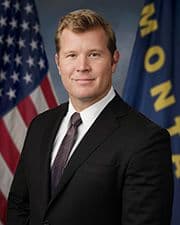
- Conservative Groups$0k
Full profile: /officials/S001232
Source: Congress.gov · FEC
Cosponsors (0)
Members who have signed on to support this bill since introduction. Source: Congress.gov.
No cosponsors on record. Bills can pass without cosponsors — this often means the sponsor introduced the bill alone, either because it's a messaging bill, a chairman's mark, or simply early in the legislative cycle.
Latest Action
The most recent step in the bill's legislative path. Committee Activity below shows referrals and reports; the full action-by-action history including floor proceedings lives at Congress.gov →
Committee Activity
Currently in
- Senate Committee on the JudiciaryReferred To · 2026-08-03
Plain-English Summary
The proposal would allow certain military special operations personnel to carry concealed firearms in all U.S. states and territories, even in places where state or local laws normally prohibit it. This would give qualified special operators the same concealed carry rights across the country regardless of where they live or travel. The bill is currently under review by the Senate Judiciary Committee.
AI-assisted summary generated from the official bill metadata (title, subjects, actions) sourced from Congress.gov. Cached and reviewed. Always verify against the official text linked below.
Full Bill Text
Verbatim text published on Congress.gov via GovInfo. Use Cmd+F / Ctrl+F to search within this excerpt.
[Congressional Bills 119th Congress] [From the U.S. Government Publishing Office] [S. 5208 Introduced in Senate (IS)] <DOC> 119th CONGRESS 2d Session S. 5208 To amend title 18, United States Code, to provide concealed carry privileges to qualified special operators. _______________________________________________________________________ IN THE SENATE OF THE UNITED STATES August 3, 2026 Mr. Sheehy introduced the following bill; which was read twice and referred to the Committee on the Judiciary _______________________________________________________________________ A BILL To amend title 18, United States Code, to provide concealed carry privileges to qualified special operators. Be it enacted by the Senate and House of Representatives of the United States of America in Congress assembled, SECTION 1. SHORT TITLE. This Act may be cited as the ``Special Operations Forces Concealed Carry Act''. SEC. 2. FINDINGS. Congress finds the following: (1) Highly trained special operations personnel who achieved Expert level military marksmanship qualifications have demonstrated proficiency with firearms and a commitment to public service. (2) Their service should be recognized without undermining existing safeguards on firearm possession in sensitive places. SEC. 3. QUALIFIED SPECIAL OPERATOR AUTHORITY. (a) In General.--Section 926C of title 18, United States Code, is amended-- (1) in subsection (a)-- (A) by inserting ``or a qualified special operator'' after ``qualified retired law enforcement officer''; and (B) by inserting ``or, in the case of such a qualified special operator, the identification required by subsection (g)'' after ``subsection (d)''. (b) Special Rules for Qualified Special Operators; Definitions.-- Section 926C of title 18, United States Code, is amended by adding at the end the following: ``(g) Special Rules for Qualified Special Operators.-- ``(1) Training and certification requirement.--An individual authorized to carry under this section as a qualified special operator shall, at the expense of the individual, meet the active duty standards for qualification in firearms training, as determined by the State in which the individual resides, not less recently than 1 year before the date the individual is carrying the concealed firearm. ``(2) Concealed carry use-of-force training.--As a prerequisite to carrying under this section, a qualified special operator shall complete a Concealed Carry Use of Force in Society training course certified by the Attorney General covering civilian legal duties, standards of reasonable belief, and de-escalation techniques relevant to domestic concealed carry. ``(3) Continuing eligibility.-- ``(A) In general.--The authority under this section shall continue only while the individual-- ``(i) maintains an honorable discharge status, as applicable; ``(ii) maintains status as a qualified special operator; ``(iii) is not under the influence of alcohol or another intoxicating or hallucinatory drug or substance; ``(iv) maintains eligibility under Federal law to possess a firearm; and ``(v) satisfies the requirements of paragraphs (1) and (2). ``(B) Immediate termination.--The authority under this section shall terminate immediately if the individual fails to meet the criteria under subparagraph (A). ``(C) Rule of construction.--Nothing in this subsection exempts a qualified special operator from any Federal firearm restriction. ``(4) Identification for qualified veterans.-- ``(A) In general.--To be authorized to carry a concealed firearm under this section, a qualified special operator shall carry proof of identity and qualification. Acceptable forms of identification include the following: ``(i) A photographic identification issued by the Department of Defense or the Department of Veterans Affairs that-- ``(I) identifies the individual as a qualified special operator; and ``(II) confirms the individual's status as such. ``(ii) A valid government issued photographic identification and official documentation of service confirming the individual's honorable discharge and status as a qualified special operator. ``(B) Law enforcement request.--An individual authorized to carry as a qualified special operator under this section shall present the identification described in this subsection upon request by law enforcement. ``(h)…
Show the remaining 700 wordsHide the remaining 700 words
Qualified Special Operator.--For purposes of this section, the term `qualified special operator' means a former member of the United States Armed Forces who attended special operations force assessment, was screened, evaluated and selected for qualification training, and was awarded and held a special warfare or special operations military occupational specialty or skill designator as defined by United States Special Operations Command. ``(i) Rule of Construction Regarding Navy Special Warfare Service.--For purposes of records or documentation describing service in Navy special operations roles, service in the United States Navy Special Warfare Command includes-- ``(1) a commissioned or warrant officer qualified in special warfare; ``(2) an enlisted member who served as a special warfare operator; ``(3) a Special Warfare Combatant Craft Crewman Warrant Officer; and ``(4) an enlisted member who served as a Special Warfare Combatant Craft Enlisted Sailor.''. (c) Technical and Conforming Amendments.-- (1) Section heading.--Section 926C of title 18, United States Code, is amended, in the section heading by inserting ``and qualified special operators'' after ``officers''. (2) Table of sections.--The table of sections for chapter 44 of title 18, United States Code, is amended by striking the item relating to section 926C and inserting the following: ``926C. Carrying of concealed firearms by qualified retired law enforcement officers and qualified special operators.''. SEC. 4. IMPLEMENTATION AND AUTHORITY. (a) Issuance of Identification to Veterans.-- (1) Identification program.--Beginning not later than 180 days after the date of enactment of this Act, the Secretary of Defense and the Secretary of Veterans Affairs shall jointly implement a program to issue the photographic identification described in section 926C of title 18, United States Code, to any individual, at the request of the individual, who meets the criteria of a qualified special operator. (2) Verification.--The Secretary of Defense and the Secretary of Veterans Affairs shall ensure that the application process for the program implemented under paragraph (1) uses the records of each Department to verify honorable discharge and status as a qualified special operator. (b) Acceptance of Proof Documents.-- (1) Alternate proof.--Prior to the expiration of the 180- day period described in subsection (a), the Secretary of Defense and Secretary of Veterans Affairs shall recognize valid service documentation as sufficient proof under section 926C of title 18, United States Code. (2) Guidance.--Not later than 90 days after the date of enactment of this Act, the Attorney General shall provide guidance to law enforcement agencies nationwide to ensure acceptance of the requisite official documentation as proof of authority to carry under Federal law until such time as the photographic identification of the Department of Defense of the Department of Veterans Affairs, as applicable, is made available. (c) Regulations.--The Secretary of Defense and the Secretary of Veterans Affairs are authorized to promulgate regulations and guidance to carry out this Act, and the amendments made by this Act, including the form and process for issuing photographic identification cards, any application procedures, consistent with section 926C of title 18, United States Code, and communication with Federal, State, and local law enforcement agencies regarding implementation. SEC. 5. NO PRIVATE RIGHT OF ACTION. (a) Rule of Construction.--Nothing in this Act or the amendments made by this Act shall be construed to create any private right of action or legal claim, including an action or claim against any government agency, officer, or private entity for failure to implement or comply with its terms. (b) Existing Remedies.--Any remedy for noncompliance or violation of section 926C of title 18, United States Code, shall be limited to the remedies provided under such section or other applicable law, as in effect on the day before the date of enactment of this Act. SEC. 6. APPLICABILITY. A qualified special operator may exercise the authority to carry a firearm under section 926C of title 18, United States Code, with the valid service documentation described in section 4(b)(1). SEC. 7. SEVERABILITY. If any provision of this Act, an amendment made by this Act, or the application of such provision or amendment to any person or circumstance is held to be unconstitutional, the remainder of this Act, the amendments made by this Act, and the application of the provisions of such to any person or circumstance shall not be affected thereby. <all>
Related legislation
Bills by the same sponsor or covering overlapping subjects.
- S5265A bill to identify and take action against international trade practices of high income countries that unfairly exploit innovation by deviating from market-based policies and unfairly exploit United States innovation, and for other purposes.Referred to Committee · 2026-08-05
- S5225K–12 AI Literacy and Readiness Act of 2026Referred to Committee · 2026-08-04
- S5174American Food for American Schools Act of 2026Referred to Committee · 2026-07-30
- S5123Lunar Landing Day ActIntroduced · 2026-07-30