S5265Referred to Committee
USTRx Act
Introduced
In Committee
3
Passed One Chamber4
Passed Both5
Signed into Law119th
Congress
2026-08-05
Introduced
2
Cosponsors
S
ⓘType
Sponsor
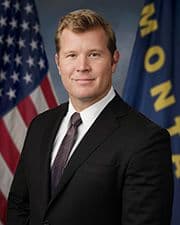
Tim Sheehy
Republican · MT · Senator
Votes with party: 76.6% (866 recorded votes)
Top industries funding sponsor:
- Conservative Groups$0k
Full profile: /officials/S001232
Source: Congress.gov · FEC
Cosponsors (2)
Members who have signed on to support this bill since introduction. Source: Congress.gov.
Latest Action
The most recent step in the bill's legislative path. Committee Activity below shows referrals and reports; the full action-by-action history including floor proceedings lives at Congress.gov →
Committee Activity
Currently in
- Senate Committee on FinanceReferred To · 2026-08-05
Plain-English Summary
Plain-English summary pending. Introduced on 2026-08-05. Check back soon — summaries are generated as bills progress through Congress.
Subjects
Foreign Trade and International Finance
Full Bill Text
Verbatim text published on Congress.gov via GovInfo. Use Cmd+F / Ctrl+F to search within this excerpt.
[Congressional Bills 119th Congress] [From the U.S. Government Publishing Office] [S. 5265 Introduced in Senate (IS)] <DOC> 119th CONGRESS 2d Session S. 5265 To identify and take action against international trade practices of high income countries that unfairly exploit innovation by deviating from market-based policies and unfairly exploit United States innovation, and for other purposes. _______________________________________________________________________ IN THE SENATE OF THE UNITED STATES August 5, 2026 Mr. Sheehy (for himself, Mr. McCormick, and Mr. Budd) introduced the following bill; which was read twice and referred to the Committee on Finance _______________________________________________________________________ A BILL To identify and take action against international trade practices of high income countries that unfairly exploit innovation by deviating from market-based policies and unfairly exploit United States innovation, and for other purposes. Be it enacted by the Senate and House of Representatives of the United States of America in Congress assembled, SECTION 1. SHORT TITLE. This Act may be cited as the ``Use Sovereignty To reduce Rx Act'' or the ``USTRx Act''. SEC. 2. FINDINGS; SENSE OF CONGRESS. (a) Findings.--Congress finds the following: (1) Pharmaceutical price controls in foreign markets distort global trade flows and competition by depressing the prices of innovative drugs and exploiting pharmaceutical innovations researched and developed in the United States. (2) By setting prices at levels that are not market-based, such price controls undervalue the discovery of new, innovative treatments, diminish opportunities and incentives for global innovation in new medicines, and threaten to restrict access to new treatments and cures for United States patients and consumers. (3) Recognizing those dynamics, it is critical that the United States use all available trade tools to address such free-riding to ensure that foreign government regulatory reimbursement regimes are transparent, provide procedural fairness, are non-discriminatory, and provide full market access to United States products. (b) Sense of Congress.--It is the sense of Congress that-- (1) ensuring the security of innovative and affordable healthcare is a top priority for the people of the United States and for Congress; (2) foreign government policies that mandate artificially low drug prices in foreign markets undermine that priority by reducing global incentives to invest in the development of new medicines; (3) such exploitative behavior unfairly shifts the cost of developing new treatments to the United States and unduly relies on United States patients and taxpayers to finance global pharmaceutical innovation; and (4) safeguarding access to life-saving treatments for United States patients requires combating such behavior so that foreign countries pay their fair share of the costs associated with the development of new drugs. SEC. 3. CHIEF PHARMACEUTICAL TRADE NEGOTIATOR. Section 141 of the Trade Act of 1974 (19 U.S.C. 2171) is amended-- (1) in subsection (b)(2)-- (A) in the first sentence, by inserting ``one Chief Pharmaceutical Trade Negotiator,'' after ``one Chief Agricultural Negotiator,''; and (B) by inserting ``the Chief Pharmaceutical Trade Negotiator,'' after ``the Chief Agricultural Negotiator,'' each place it appears; and (2) in subsection (c), by adding at the end the following new paragraph: ``(7) The principal functions of the Chief Pharmaceutical Trade Negotiator shall be to conduct trade negotiations, enforce trade agreements relating to United States pharmaceutical products, and take appropriate action to address acts, policies, or practices of high- income countries that have a significant adverse impact on the ability of United States pharmaceutical manufacturers to enjoy full market access. The Chief Pharmaceutical Trade Negotiator shall be a vigorous advocate on behalf of United States manufacturers and consumers of pharmaceutical products and shall perform such other functions as the United States Trade Representative may direct. In carrying out such duties, the Chief Pharmaceutical Negotiator shall, as appropriate, consult or…
Show the remaining 471 wordsHide the remaining 471 words
coordinate with the Chief Intellectual Property Negotiator.''. SEC. 4. ANNUAL REPORT ON ACTS, POLICIES, AND PRACTICES OF HIGH INCOME COUNTRIES. (a) List of High Income Countries.--The United States Trade Representative shall compile and annually update a list of each foreign country that is defined as ``high income'' by the official statistics of the International Bank for Reconstruction and Development of the World Bank. (b) Report Required.--With respect to each country included on the most recent list required under subsection (a), the United States Trade Representative, acting through the Chief Pharmaceutical Trade Negotiator (as established pursuant to the amendments made by section 3), shall annually submit to the Committee on Ways and Means of the House of Representatives and the Committee on Finance of the Senate and concurrently publish on a publicly available website of the United States Trade Representative a report that-- (1) describes in detail the results of a review of the acts, policies, and practices of such country relating to the trade in pharmaceutical products in the previous fiscal year; (2) determines whether such acts, policies, or practices-- (A) are not developed and implemented in a fair, nondiscriminatory, and transparent manner; (B) are not market-based or do not appropriately recognize the value of innovative medicines; (C) deny reciprocal market access for United States products; (D) diminish incentives for innovation in a manner that delays, prevents, or otherwise adversely impacts the introduction of new medicines in the United States; (E) violate or are inconsistent with the provisions of, or otherwise deny benefits to the United States under, any bilateral or multilateral trade agreement with such country; and (F) are unjustifiable or impose a significant burden or unreasonable or discriminatory restriction on United States commerce with such country; and (3) describes the current status of any responsive actions taken by the United States with respect to acts, policies, or practices for which the United States Trade Representative has determined and included in any prior report, pursuant to paragraph (2), that the interests of the United States are harmed, including responsive actions pursuant to title III of the Trade Act of 1974 (19 U.S.C. 2411 et seq.). SEC. 5. RESPONSE TO ADVERSE ACTIONS BY HIGH INCOME COUNTRIES. Not later than 30 days after the United States Trade Representative determines that an act, policy, or practice of a country included in the most recent list required under section 4(a) meets any of the criteria described in section 4(b)(2), the United States Trade Representative shall submit to Committee on Ways and Means of the House of Representatives and the Committee on Finance of the Senate a plan to respond to the act, policy, or practice, which may include initiating an investigation under title III of the Trade Act of 1974 (19 U.S.C. 2411 et seq.), in accordance with section 302(b)(1) of that Act. <all>
Related legislation
Bills by the same sponsor or covering overlapping subjects.
- S5123Lunar Landing Day ActPassed Senate · 2026-08-20
- S5274Ride in Freedom ActReferred to Committee · 2026-08-06
- S5225K–12 AI Literacy and Readiness Act of 2026Referred to Committee · 2026-08-04
- S5208Special Operations Forces Concealed Carry ActReferred to Committee · 2026-08-03