S4394Passed Senate
Promoting Police Leadership Act
Introduced
In Committee
Passed One Chamber
4
Passed Both5
Signed into Law119th
Congress
2026-04-27
Introduced
14
Cosponsors
S
ⓘType
Sponsor
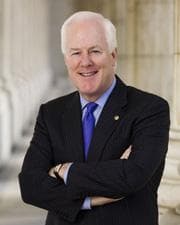
John Cornyn
Republican · TX · Senator
Votes with party: 74.6% (820 recorded votes)
Top industries funding sponsor:
- Conservative Groups$79,418k
- Climate & Environment$24,960k
Full profile: /officials/C001056
Source: Congress.gov · FEC
Cosponsors (14)
Members who have signed on to support this bill since introduction. Source: Congress.gov.
- Sheldon Whitehouse (D-RI)Original· 2026-04-27
- Lindsey Graham (R-SC)· 2026-05-11
- Mark Kelly (D-AZ)· 2026-05-11
- Marsha Blackburn (R-TN)· 2026-05-11
- Richard J. Durbin (D-IL)· 2026-05-11
- Shelley Moore Capito (R-WV)· 2026-05-11
- Alex Padilla (D-CA)· 2026-05-18
- Amy Klobuchar (D-MN)· 2026-05-18
- Mazie K. Hirono (D-HI)· 2026-05-18
- Peter Welch (D-VT)· 2026-05-18
- Richard Blumenthal (D-CT)· 2026-05-18
- Ted Cruz (R-TX)· 2026-05-18
- Thom Tillis (R-NC)· 2026-05-18
- Catherine Cortez Masto (D-NV)· 2026-05-20
Latest Action
The most recent step in the bill's legislative path. Committee Activity below shows referrals and reports; the full action-by-action history including floor proceedings lives at Congress.gov →
Passed Senate with an amendment by Voice Vote. (consideration: CR S2724, S2727; text of amendment in the nature of a substitute: CR S2724)
2026-06-10
Source: Congress.gov
Committee Activity
Currently in
- Senate Committee on the JudiciaryReported By · 2026-05-19
Previously
- Senate Committee on the JudiciaryMarkup By · 2026-05-14
- Judiciary CommitteeReferred To · 2026-04-27
- Senate Committee on the JudiciaryReferred To · 2026-04-27
Plain-English Summary
The bill would improve a federal grant program that helps local police departments hire and train officers by adding new funding and requirements specifically for training police commanders and supervisors in leadership skills. This would affect police departments across the country that receive federal grants, potentially helping them develop better management practices. The measure is currently under review by the Senate Judiciary Committee.
AI-assisted summary generated from the official bill metadata (title, subjects, actions) sourced from Congress.gov. Cached and reviewed. Always verify against the official text linked below.
Subjects
Crime and Law Enforcement
Full Bill Text
Verbatim text published on Congress.gov via GovInfo. Use Cmd+F / Ctrl+F to search within this excerpt.
[Congressional Bills 119th Congress] [From the U.S. Government Publishing Office] [S. 4394 Introduced in Senate (IS)] <DOC> 119th CONGRESS 2d Session S. 4394 To amend the Omnibus Crime Control and Safe Streets Act of 1968 to improve the COPS program with respect to training command-level personnel, and for other purposes. _______________________________________________________________________ IN THE SENATE OF THE UNITED STATES April 27, 2026 Mr. Cornyn (for himself and Mr. Whitehouse) introduced the following bill; which was read twice and referred to the Committee on the Judiciary _______________________________________________________________________ A BILL To amend the Omnibus Crime Control and Safe Streets Act of 1968 to improve the COPS program with respect to training command-level personnel, and for other purposes. Be it enacted by the Senate and House of Representatives of the United States of America in Congress assembled, SECTION 1. SHORT TITLE. This Act may be cited as the ``Promoting Police Leadership Act''. SEC. 2. COMMANDER CURRICULUM DEVELOPMENT. (a) Definitions.--Section 901(a) of title I of the Omnibus Crime Control and Safe Streets Act of 1968 (34 U.S.C. 10251(a)) is amended-- (1) in paragraph (32), by striking ``and'' at the end; (2) in paragraph (33), by striking the period at the end and inserting a semicolon; and (3) by adding at the end the following: ``(34) the term `command-level personnel' means law enforcement officers employed by a State, local, or Tribal law enforcement agency whose responsibilities include managing, directing, or overseeing law enforcement operations within a geographic subunit of the jurisdiction in which such agency has primary responsibility for law enforcement activities.''. (b) COPS Program.--Section 1701 of title I of the Omnibus Crime Control and Safe Streets Act of 1968 (34 U.S.C. 10381) is amended by adding at the end the following: ``(q) Training in Improving Police Command-Level Personnel Leadership, Management, and Effectiveness.-- ``(1) Training curricula.-- ``(A) In general.--Not later than 180 days after the date of enactment of this subsection, the Attorney General shall develop training curricula or identify effective existing training curricula for command-level personnel relating to-- ``(i) leadership and strategic thinking; ``(ii) critical incident response and management, including understanding, preparing for, and responding to the effect of critical incidents on officers and communities; ``(iii) risk management; ``(iv) officer wellness; ``(v) data analysis and data-driven policing tactics; ``(vi) evidence-based decision making; and ``(vii) building community trust. ``(B) Requirements.--The training curricula developed or identified under this paragraph shall include-- ``(i) primarily in-person instruction and peer-to-peer learning; ``(ii) a framework for a practical, evidence-based problem solving component under which participating command-level personnel-- ``(I) identify and develop a proposed solution to a leadership, operational, or management challenge relevant to personnel in the command- level personnel's employing law enforcement agency; ``(II) receive feedback from curriculum instructors and other participating command-level personnel to refine the proposed solution accordingly to meet the needs of the law enforcement agency and community served; and ``(III) present a final, implementable product emphasizing evidence-based strategies to program instructors and the command-level personnel's district or geographic command; and ``(iii) the incorporation of pre-course and post-course assessments to measure knowledge acquisition and leadership competencies relevant to the training curricula. ``(C) Consultation.--The Attorney General shall develop and identify training curricula under this paragraph in consultation with relevant law enforcement agencies of States and units of local government, universities with appropriate law-enforcement or leadership programs, and any other entities the Attorney General determines appropriate. ``(2) Certified programs and courses.-- ``(A) In general.--Not later than 180 days after the date on which training curricula are developed or identified under paragraph (1), the Attorney General shall establish a process to-- ``(i) certify training programs and courses offered to command-level personnel…
Show the remaining 600 wordsHide the remaining 600 words
which incorporate 1 or more of the training curricula developed or identified under paragraph (1), or equivalents to such training curricula, which may include certifying training programs or courses offered on or before the date on which the Attorney General establishes the process; and ``(ii) terminate the certification of a training program or course that fails to meet the standards developed or identified under paragraph (1). ``(B) Partnerships with educational institutions.-- Not later than 180 days after the date on which training curricula are developed or identified under paragraph (1), the Attorney General shall develop criteria to ensure that entities which offer training programs or courses that are certified under subparagraph (A) collaborate with educational institutions to evaluate and continuously improve the curricula and coursework of those educational institutions. ``(3) List.--Not later than 1 year after the date on which the Attorney General completes the activities required under paragraphs (1) and (2), the Attorney General shall publish a list of law enforcement agencies of States and units of local government employing law enforcement officers who have successfully completed a course using the training curricula developed or identified under paragraph (1), or equivalents to such training curricula, which shall include-- ``(A) the total number of law enforcement officers that are employed by the law enforcement agency; and ``(B) the number of law enforcement officers who have completed such a course.''. SEC. 3. ATTORNEY GENERAL REPORTS. (1) In general.--Not later than 2 years after the date of enactment of this Act, and annually thereafter until the date that is 3 years after the date of enactment of this Act, the Attorney General shall submit to Congress a report on the activities carried out as a result of the amendments made under section 2. (2) Contents.--Each report under paragraph (1) shall include, at a minimum, information on-- (A) steps taken by the Attorney General to develop or identify curricula under section 1701(q)(1) of the Omnibus Crime Control and Safe Streets Act of 1968, as added by section 2; (B) any assessments conducted or identified by the Attorney General on the effectiveness and utilization of curricula developed or identified under section 1701(q)(1) of the Omnibus Crime Control and Safe Streets Act of 1968, as added by section 2; (C) recommendations for curriculum updates and improvements; and (D) barriers to training implementation. SEC. 4. GAO REPORT. Not later than 3 years after the date of enactment of this Act, the Comptroller General of the United States shall-- (1) conduct a review of the actions taken by the Attorney General pursuant to this Act and the amendments made by this Act; and (2) submit to Congress a report on the review conducted under paragraph (1), which shall include a description of-- (A) the process for developing and identifying curricula under section 1701(q)(1) of the Omnibus Crime Control and Safe Streets Act of 1968, as added by section 2, including the effectiveness of the consultation by the Attorney General with the agencies, associations, and organizations identified under that section; and (B) the certification of training programs and courses under section 1701(q)(2) of the Omnibus Crime Control and Safe Streets Act of 1968, as added by section 2, including the development of the process for certification and its implementation. SEC. 5. STATE CERTIFICATIONS AND TRAINING STANDARDS. Nothing in this Act, or an amendment made by this Act, shall be construed to preempt or replace the authority of any State or local government, including any Peace Officer Standards and Training entity or similar certifying body, to set and enforce certification, training, or qualification standards for law enforcement officers. <all>
Related legislation
Bills by the same sponsor or covering overlapping subjects.
- S4766A bill to require the Secretary of Defense to establish a pilot program to evaluate the safety, quality, and qualification pathways of printable energetic feedstocks for controlled additive manufacturing applications.Referred to Committee · 2026-06-11
- S4775A bill to amend the Protection of Lawful Commerce in Arms Act to clarify liability protections for firearms and associated manufacturers and retailers, and for other purposes.Referred to Committee · 2026-06-11
- S789Critical Minerals Security Act of 2025Referred to Committee · 2026-06-10
- S1890Carla Walker ActPassed Senate · 2026-06-10